



Sheet metal processing and welding process analysis
Published on:
2022-02-10
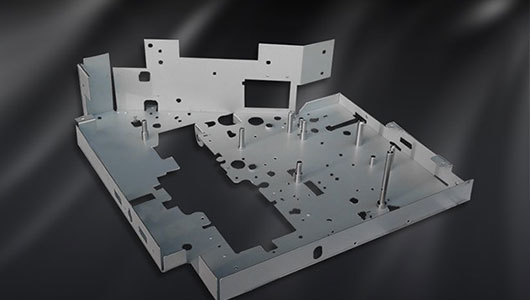
Sheet metal processing materials are widely used, not only in the machinery industry, but also in automobile manufacturing, aerospace and other fields, and have been rapidly expanded and popularized in other industries and fields. Then, let's learn about sheet metal Let's analyze the welding process of processing group!
The function of sheet metal processing material is determined by factors such as machining method, appearance, and its own material. The corresponding metal material unfolding calculation, bending, welding, painting and a series of processing and processing technologies are directly related to the final production quality, appearance and stability level of sheet metal parts. In order to maintain a good appearance, sufficient strength and required precision, it can reflect the mechanical maturity of the production process and the advancement of manufacturing technology. With the rapid development of my country's machinery manufacturing industry and the increasing complexity of sheet metal parts processing and manufacturing requirements, calculating the size of sheet metal parts during processing is an important factor. Sheet metal bending is one of the heavier steps in the machining process.
The effect of bending directly affects the size and appearance properties of the final product, and affects the selection and operation difficulty of the subsequent group of welding processes. This paper explains and interprets the key processes of sheet metal unfolding calculation, bending, welding, painting and other links from the process point of view. Analyze the existing problems one by one and propose corresponding solutions.
Calculation of sheet unfolding length
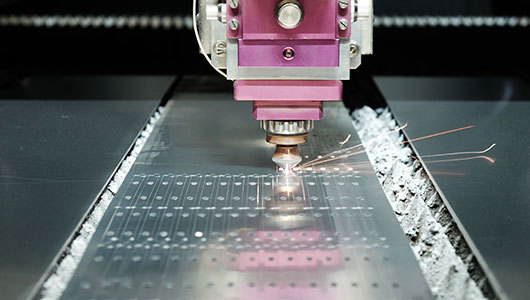
The sheet metal manufacturing process is always related to the bending work. Before the bending process begins, the processing dimensions and incision positions of various parts should be clearly marked on the corresponding drawings. A reasonable processing method can control the product tolerance within the range of good products. Avoid the drop in product qualification rate due to hole position and external dimension errors during subsequent operations such as laser cutting.
In the actual sheet metal processing production process, in this working process, firstly, two square materials of equal size are cut out from a specific metal material by a machine tool as a test sample. It is often difficult to predict the corresponding bending compensation value in advance. To do this, test bends are required to obtain bend compensation values for a specific material.
The standard size of the square material is obtained by measuring the dimensions in different directions, and the length of the two right-angled sides after bending is measured by combining the bending operations in the parallel and vertical directions. The bending compensation that occurs at this time is the length of the two right-angled sides minus the length of the original square material side, and the compensation value of the specific metal material in different directions is indirectly obtained. By combining appropriate calculation formulas, the accuracy of the calculation of the unrolled length of the sheet can be further improved.
Sheet metal welding process
Sheet metal welding commonly used oxygen arc welding, resistance spot welding, carbon dioxide shielded welding, manual arc welding and other methods. When choosing a welding process, the manufacturing cost should be properly considered. In the actual sheet metal processing process, the selection of the specific welding process and the formulation of the scheme need to be considered in combination with the material, shape and use of the sheet metal. For this, sheet metal needs to choose a thin plate with a thickness of less than 2 mm. The splicing process before welding should prepare for the subsequent welding work. In the important parts of the welding machine, the plates need to be completely aligned, and carbon dioxide shielded welding and arc welding are commonly used. Because the welding effect of sheet metal materials is limited to a certain extent by welding equipment. After ensuring that the surface is flat and free of gaps, use continuous spot welding. After welding, the seams are waterproofed with sheet metal rubber.
In case of thick material and technical requirements such as full welding, the corresponding current and voltage should be adjusted, and the welding sequence of the corresponding operation should be adjusted by the method of segmented full welding.
Depending on the purpose of welding the sheet metal parts, the processing and process may be different. For example, for sheet metal parts that require tightness such as fuel tanks. In order to avoid welding defects, it is necessary to carry out full welding in the groove mode at the flat welding position. After the welding is completed, it is polished and smoothed, and the oil leakage inspection is carried out in time.
The above is the analysis of sheet metal processing and welding process. If you want to know more, please feel free to contact us!
Relevant News
Sheet metal processing production process
2022-07-06


Jiangsu Songshi metal products Co., Ltd
E-mail:jsss_metal@163.com
Address: No. 32, Haiyan Road, Qidong high tech Industrial Development Zone, Jiangsu Province
Copyright © 2022 Jiangsu Songshi metal products Co., Ltd.