



What are the differences between precision sheet metal processing and green sheet metal processing
Published on:
2022-02-21
The concept of precision sheet metal processing and green sheet metal processing changes with the times. I have studied sheet metal technology before. Use scissors to cut open seams for sheet metal, use needles or circles to plan lines, and hit the folded edges with a wooden square. The dimensional accuracy is less than 1mm, and there are no obvious hammer marks from the outside. It is also a high level of woodworking. Then it is made into a hydraulic tool and a bending machine. The parts are labor-saving, the surface quality is uniform after processing, and the appearance is very beautiful. Then, CNC tools and CNC bending machines came out, the bending angle of the processed parts can be accurate to 0.1, and the size can be accurate to more than 0.1mm, and it is no longer necessary to use trapezoidal screws or screws to adjust little by little or many times as before. Positioning, saves a lot of time and material (manual adjustment inevitably cuts and folds several sheets, even for small materials. Now there is an automatic material library, which can not only realize automatic cutting, but also according to the machining parts. The plate thickness, material and size are automatically completed in and out of the warehouse. Then, let's take a look at the difference between precision sheet metal processing and green sheet metal processing!
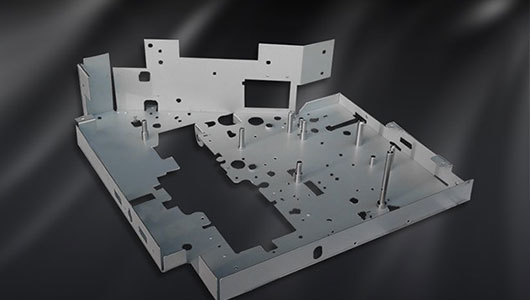
At present, the uncoiling and leveling accuracy of precision sheet metal processing can reach 0.3~0.5mm. The bending accuracy of general sheet metal parts can range from 0.05mm to 0.1mm (CNC machine tools), and the positioning accuracy and repeat positioning accuracy of punching processing are mostly below 0.1mm (of course, large sheet metal products are like parts larger than 1500mm. Big)
Tolerance options for precision sheet metal machining
Now the error of CNC sheet metal machine tools has been reduced from 100m to tens of meters, which means the "finishing" of sheet metal, that is, the machining accuracy. Our precision sheet metal is in "secret" again. The material is dense and uniform, no surface erosion points, no micro-cracks. Precision sheet metal design technology requires that the surface of the finished product be smooth and free of rust, and no defects such as scratches and scratches that damage the surface of the parts. The edges and corners should be clear, the rounded corners should be smooth, and there should be no warping deformation. Remove all burrs and make them blunter than sharp corners. There should be no flanging at the interface of blanking and punching. The height of the burr should be below 0.1mm. Shallow holes must not have wrinkles, cracks, twists, etc. Appearance dimensions and tolerances) including linear dimensions, angles, geometric tolerances, etc.) shall meet the technical requirements of the pattern. This is also the technical requirements for drawings and testing for designing precision sheet metal parts.
Process requirements for green sheet metal processing
Both invaluable assets and clear waters are needed. Green sheet metal processing requires production and discharge through the following processes.
Passivation: Sheet metal electro-galvanizing needs passivation treatment to obtain a denser oxide protective layer. The stainless steel plate itself has a certain corrosion resistance, which can be directly processed in general, and passivation treatment is required under certain circumstances. When using SUS304 or SUS316 in the water heater tank, passivation treatment is required to prevent the parts from rusting at high temperature. The disadvantage of this process is that the VOC (volatile organic gas) content is high, which is very harmful to the human body; the paint utilization rate is low To about 50%, resources are wasted. However, electrostatic powder spraying does not require a large amount of diluent, the powder does not contain harmful substances, no primer, and the powder recycling rate is high. With the popularization and application of epoxy resin and polyester powder coating, the beauty of sheet metal parts is comparable to that of coating. , the corrosion resistance is also greatly improved. As the country's requirements for environmental protection are getting higher and higher, the additives are evaporated and cured to form a film, which does not pollute the environment, has good coating quality, high adhesion and mechanical strength, corrosion resistance, and short curing time. FePO4 is precipitated twice in the sedimentation tank and then processed into other chemical raw materials, which reduces the environmental pollution caused by phosphating treatment.
Many spraying production lines have adopted robot operation, which not only reduces the injury to workers but also ensures the stability of quality. At present, the powder recovery device has become the standard configuration of the coating production line. It absorbs most of the powder through a filter, installs a solenoid valve and a sensor, sprays water when the workpiece passes through, and closes it after passing, saving 50% of energy and water.
The emission volume basically reaches zero pollution, which is where we study and catch up. The pH value of the solution after pretreatment is above 8, and the treatment solution after ordinary spray phosphating treatment is acidic.
At present, there is a new pretreatment technology that replaces phosphating with silane treatment. In the early 1990s, the United States began to conduct theoretical research on silane treatment, which was really driven by pressure, and now the technological gap with European and American companies is getting smaller and smaller. Silane treatment of sheet metal surface stipulates that it does not contain heavy metal ions such as Zn and Ni, and does not contain p. The heating process is omitted. The cost of phosphating treatment is 5 to 8 times that of silane treatment; phosphating technology does not require equipment modification, and Ni is harmful to human body. Harmful elements, WTO stipulates that Ni needs to achieve zero emission after 2016; silane treatment can be carried out at room temperature, saving the cost of slag cleaning and anti-tank; treatment time is short, easy to control, and effectively improves the adhesion of paint, powder and sheet metal; Only need to adjust the groove position; no catalyst is used to avoid harm to human body; silane treatment has no sediment, and can perform collinear treatment on iron plate, aluminum plate, galvanized plate, etc.
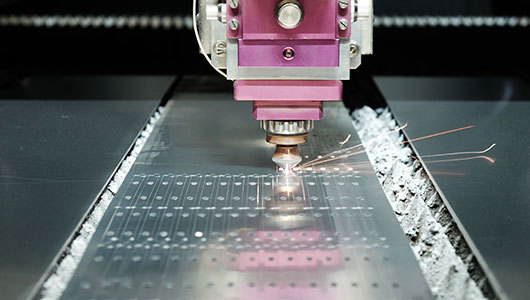
It is advocated that green sheet metal processing should start from the side. While pursuing automation, digitization and informatization, it should be isolated from the welding station to reduce radiation exposure. At the same time, pay attention to personal protection against noise, dust, and oxidants during sandblasting and anodizing, and protect employees' bodies, including the installation of laser cutting machines and protective covers. When welding, please pay attention to dust removal of welding fumes, as well as dust absorption and personal protection when grinding.
The above is the difference between precision sheet metal processing and green sheet metal processing. If you want to know more, please feel free to contact us!
Relevant News
Sheet metal processing production process
2022-07-06


Jiangsu Songshi metal products Co., Ltd
E-mail:jsss_metal@163.com
Address: No. 32, Haiyan Road, Qidong high tech Industrial Development Zone, Jiangsu Province
Copyright © 2022 Jiangsu Songshi metal products Co., Ltd.